
Luxury Scented Candle Set
Three winter scents — pine, vanilla & cinnamon. The gift that never misses.
Guests, budget and party style in — a full plan out: how the money splits, how much food and drink to buy, which activities fit your crowd, and a timeline so nothing is left to Christmas Eve.
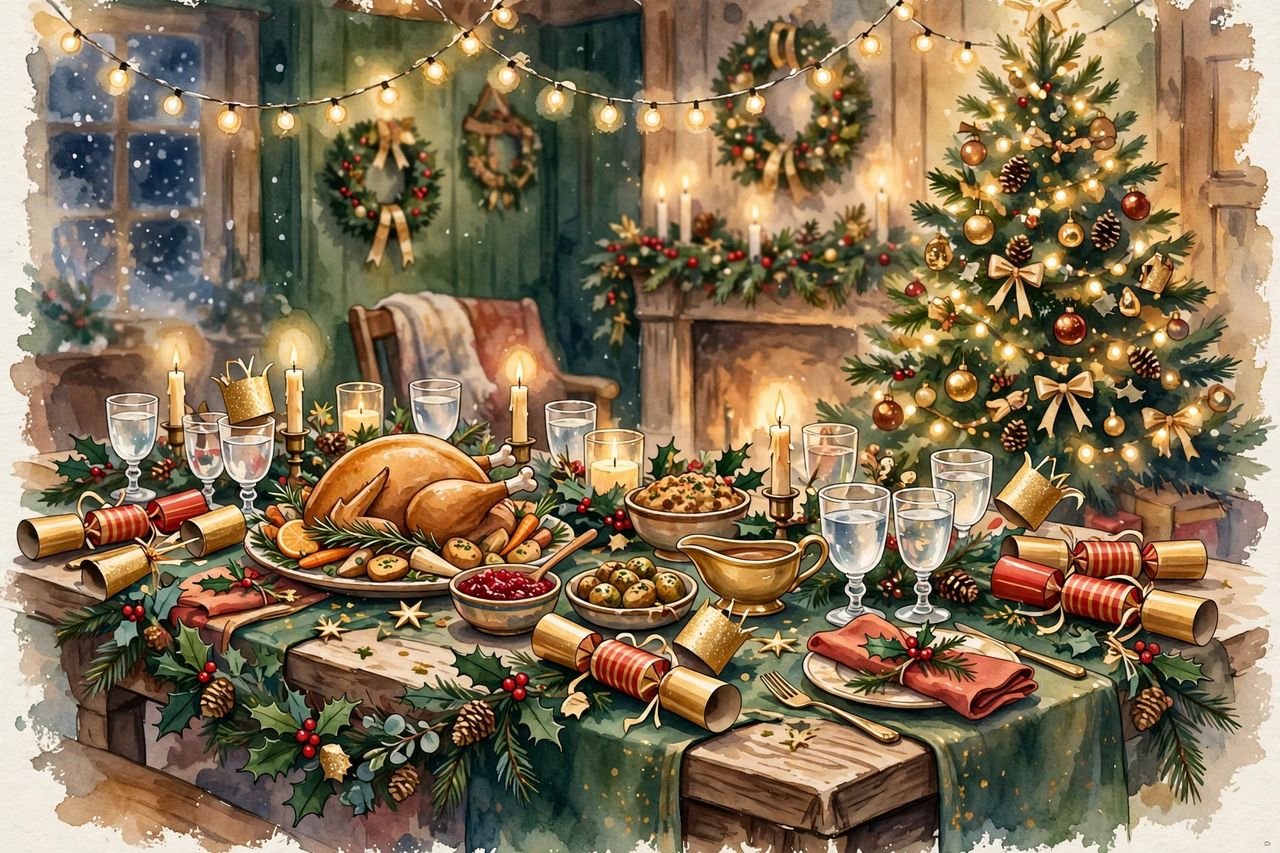
The planner divides your total into food 45%, drinks 20%, decorations 15%, activities 10% and a 10% buffer — because every party has one surprise cost, and it is better to meet it in the plan than at the checkout. Per-guest cost is shown at the top, the fastest sanity check that the guest list and the budget agree.
Food quantities use the caterer's rule of thumb: about 450g (1 lb) of main dish per adult before cooking, two desserts per person, and snacks out from the moment the first guest arrives. For kids' parties the wine line becomes extra juice and hot chocolate automatically.
Every number in the planner comes from catering rules of thumb that professionals actually use. Drinks: plan one drink per guest per hour for the first two hours, then one every hour after — and always a third of the total as soft options. Food for a party that replaces a meal: 12–15 bites per person; for a drinks-party nibble spread, 6–8. Ice is the classic under-buy: roughly half a kilo per person once cooling bottles is counted. The planner blends these with your budget split so the shopping list and the money agree with each other.
The budget split itself — most on food, then drinks, then decor, with a contingency kept back — mirrors how real parties succeed or fail. Nobody remembers a centrepiece; everybody remembers running out of food at nine o'clock.
Too much menu. Five dishes done well beat nine done anxiously — your guests came for the evening, not a tasting menu. No landing zone. Coats, bags and bottles need a planned home or they colonise the sofa by eight. Forgetting the finish. Tea, coffee and something small and sweet at the end is how a party lands softly instead of just stopping. Plan the ending and the whole night feels designed — because it was.
Layout quietly decides whether a party mixes or clumps. Put drinks and food at opposite ends of the space so guests keep crossing the room — every crossing is two new conversations. Keep one chair-free standing zone near the music for the dancers and the storytellers, and never place the only bin where it becomes a congregation point. Coats go in a bedroom, not on the sofa, and the host's phone charger lives in the kitchen, because the kitchen is where the host actually is. None of this costs money, which is the theme of this page: the planner handles quantities and budget, but the party itself is made of flow, light and welcome — the three things that were never for sale anyway.
Half of party planning is knowing who is coming, and reply rates are a design problem. The invitation that works says four things in the first two lines: the date, the start time, the address, and what kind of party it is — dinner, drinks, or "come hungry". Add one line of logistics (parking, kids welcome, plus-ones welcome) and one deadline ("tell me by Friday so the food maths works — planning a party? Our planner explains why the numbers matter"). Send it as a message people can answer in one tap, chase once, cheerfully, a week later, and then plan for the number you have — plus two, because two extra chairs is hospitality and ten extra portions is a cry for help.
Ask about dietary needs on the invitation, not at the door — one line ("tell me what you can't eat; the menu has room") collects the information while there is still time to use it. Then label dishes with small cards: it saves every guest the awkward tour of asking, and it makes the vegetarian main a featured dish instead of an apology. Plan one hero dish that happens to suit almost everyone, and the rest of the menu can be as traditional as you like.
The two numbers everything else hangs on.
Family, friends, kids or office — activities match the crowd.
Invites at 2 weeks, shopping at 1 week, prep the day before.